The Lake District receives around 18 million visitors a year, and in summer the honeypot villages of Bowness, Ambleside, and Keswick can feel overwhelmed. But the national park covers 912 square miles, and beyond the popular spots lies a quieter, wilder landscape that most visitors never discover.
This guide takes you to the Lake District's hidden gems — the valleys, lakes, and villages that reward a willingness to drive a few miles further or walk an extra hour.
Wastwater
Wastwater, in the far west of the Lake District, was voted Britain's favourite view in a 2007 ITV poll, and it is easy to see why. England's deepest lake sits in one of the most dramatic settings in the country — hemmed in by The Screes (a wall of loose rock plunging directly into the water) and overlooked by Great Gable and Scafell Pike.
The western Lake District is less accessible than the central valleys, which keeps the crowds down. Wastwater feels genuinely remote — there are no lake cruises, no gift shops, and no tearooms. Just a lake, mountains, and silence.
Getting there: A single-track road from Gosforth or Nether Wasdale. Limited parking at the lake head. Walk: The path along the lakeshore from the car park towards The Screes is flat and atmospheric.
Ennerdale
Ennerdale is the Lake District's quietest valley and one of the few with no road running through it. There is no pub, no shop, and no mobile signal. What there is: one of the most beautiful lakes in England (Ennerdale Water), dense woodland that is being allowed to rewild, and a sense of solitude that you will not find anywhere else in the national park.
The walk from Bowness Knott car park along the northern shore of Ennerdale Water is about three miles each way and almost entirely flat. The lake is stunning — clear water, mountain reflections, and often complete silence.
Getting there: Bowness Knott car park, accessed from Croasdale. No through road. Note: Ennerdale is a Dark Sky Discovery Site — excellent for stargazing.
Haweswater
Haweswater, in the far east of the Lake District, is a reservoir created in the 1930s by flooding the village of Mardale Green. The ruins of the old village walls occasionally emerge when water levels drop in dry summers. The lake is surrounded by wild, largely treeless fell — a landscape that feels more like the Scottish Highlands than the Lake District.
The RSPB manages the area around Haweswater, and golden eagles bred here until recently. The walk along the eastern shore to Mardale Head is peaceful and largely crowd-free.
Getting there: Single-track road from Bampton. Very limited parking at Mardale Head.
Eskdale
Eskdale is a broad, beautiful valley in the western Lakes, reached either by the Hardknott Pass (one of the steepest roads in England, with gradients of 1 in 3 — not suitable for caravans, large vehicles, or nervous drivers, and best avoided in winter ice) or more gently via the Ravenglass and Eskdale Railway from the coast.
The valley has a couple of excellent pubs (The Woolpack Inn and the Brook House Inn), the atmospheric ruins of Hardknott Roman Fort perched on the hillside, and access to some superb fell walking with few other people.
Hardknott Roman Fort: The remains of the Roman fort of Mediobogdum sit at the top of Hardknott Pass with commanding views down Eskdale. Free to visit.
Buttermere and Crummock Water
Buttermere is not exactly a secret, but it is significantly quieter than Windermere or Derwentwater. The four-mile circuit of the lake is one of the finest low-level walks in the Lakes, and the neighbouring Crummock Water — larger, deeper, and even quieter — feels like a private lake on a weekday.
The walk from Buttermere village to Scale Force, the Lake District's tallest waterfall (52 metres), via the shore of Crummock Water is about four miles and well worth the effort. The waterfall is tucked into a narrow ravine in the fell.
St Bees Head
Most Lake District visitors never reach the coast, but St Bees Head on the Cumbrian coast is one of the finest coastal walks in northern England. The sandstone cliffs rise to over 90 metres and host breeding colonies of guillemots, razorbills, puffins, and kittiwakes in spring and summer. The RSPB reserve runs guided walks during the nesting season.
St Bees is also the starting point of Wainwright's Coast to Coast Walk — the 192-mile route to Robin Hood's Bay.
Getting there: St Bees has a railway station on the Cumbrian Coast line.
Kentmere
Kentmere is a quiet valley north of Kendal that most tourists bypass on their way to Windermere. The valley has a small church, a handful of farms, and access to the Kentmere Horseshoe — a classic fell-walking circuit taking in Yoke, Ill Bell, Froswick, and Harter Fell. It is a challenging but rewarding day walk with superb views across to Windermere.
The valley has no pub and no shop. Bring everything you need.
Swinside Stone Circle
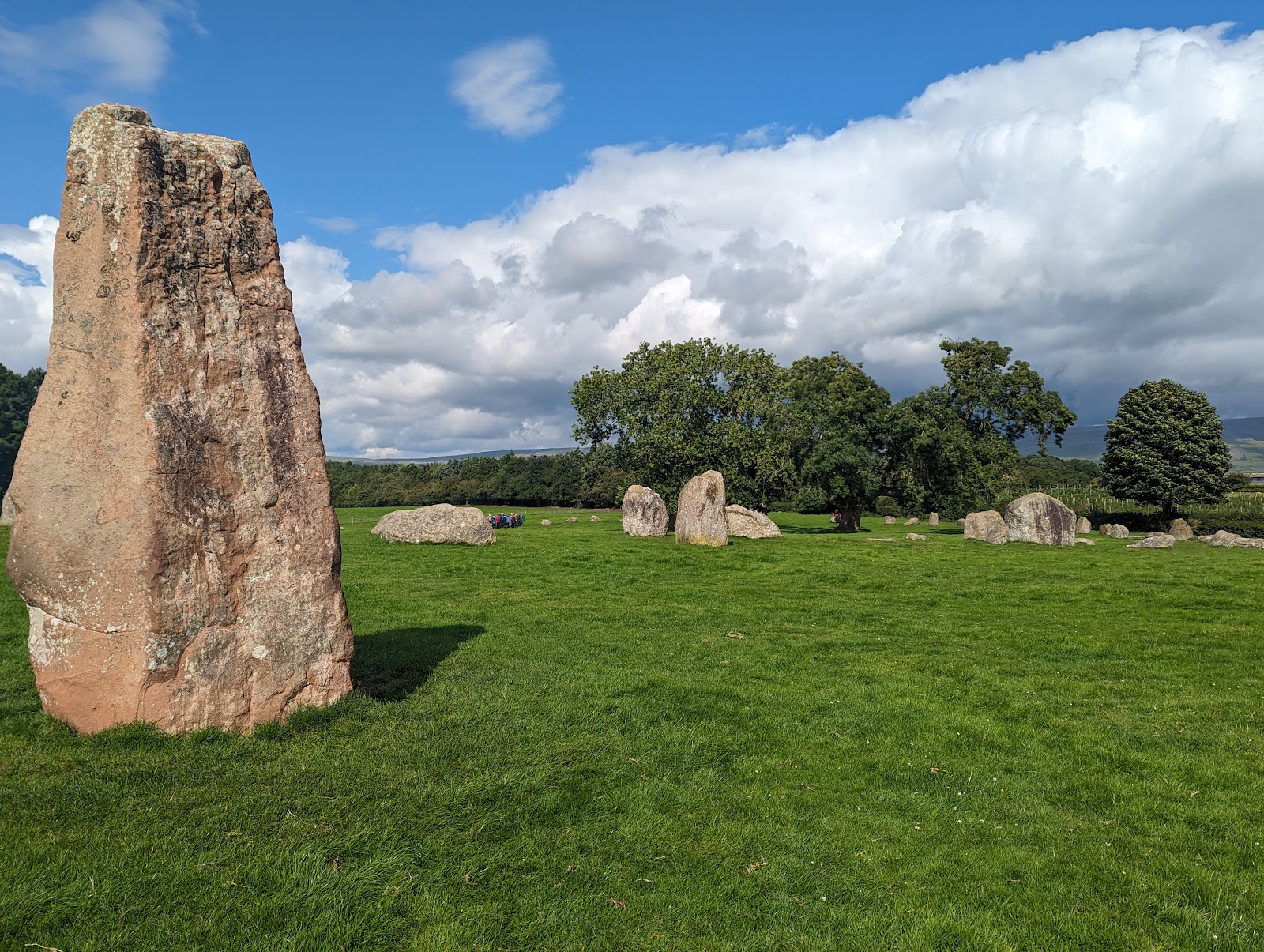
Swinside Stone Circle, near Broughton-in-Furness in the south-western Lakes, is one of the finest Bronze Age stone circles in England. The 55 stones form an almost perfect circle, and the setting — on a grassy hillside with views to Black Combe — is atmospheric. Unlike Castlerigg near Keswick (which is excellent but busy), Swinside is rarely visited and you may well have it to yourself.
Getting there: A footpath from Crag Hall farm on the road between Broughton-in-Furness and Ulpha. About a 15-minute walk.