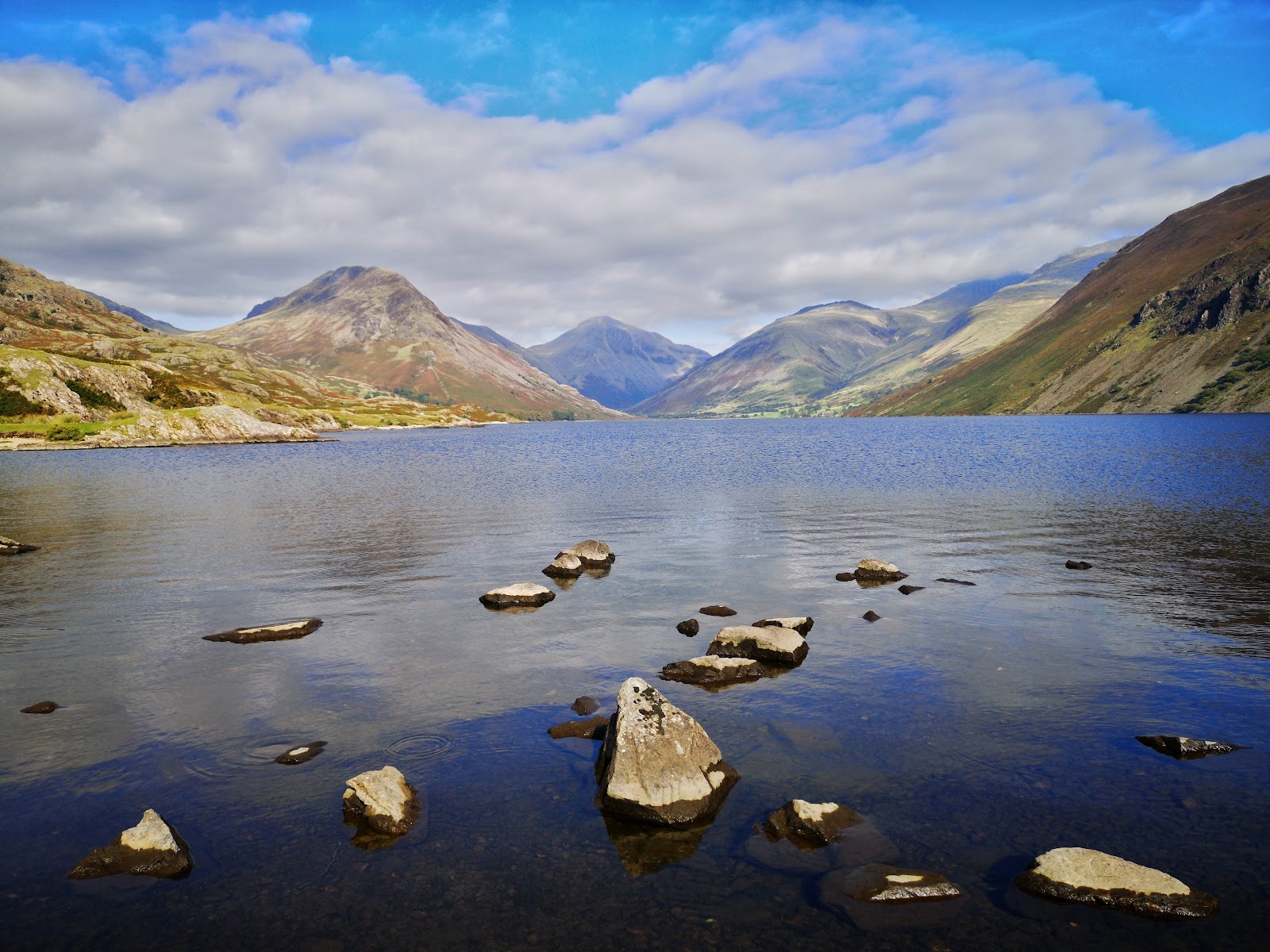
The Lake District draws around 20 million visitors a year, and most of them follow the same well-worn trail: Windermere, Ambleside, a rainy walk up Helvellyn, cream tea, home. Nothing wrong with that. But the national park harbours a deeply eccentric underbelly -- ancient stone circles that outwit the Devil, a quarry cave that looks like a giant skull, the only deposit of pure solid graphite ever discovered on Earth, and a waterfall that vanished for a century beneath invasive shrubs.
These are the places that reward the curious. None of them will cost you more than a few pounds, most are completely free, and several will genuinely make you stop and say, "How did I not know about this?"
Here are 13 of the strangest, most fascinating corners of the Lake District.
Ancient Stones and Forgotten Empires
The Lake District's human story stretches back thousands of years, and the evidence is hiding in plain sight -- if you know where to look.
Long Meg and Her Daughters
Drive north-east of Penrith towards the village of Little Salkeld, and you will find a stone circle so large it feels less like a monument and more like a landscape. Long Meg and Her Daughters is the third-widest stone circle in England, measuring 120 metres across its long axis, with 27 stones still standing from an original 66.
Long Meg herself is the real prize: a 3.7-metre monolith of red Penrith sandstone standing apart from the circle to the south-west, carved with Neolithic spiral motifs, cup-and-ring marks, and concentric circles. These carvings are among the finest examples of megalithic art in northern England and predate the pyramids.
The folklore is irresistible. Long Meg, so the legend goes, was a witch who was turned to stone along with her coven of daughters. It is said to be impossible to count the stones and arrive at the same number twice -- a claim that visitors have been gleefully testing for centuries.
Getting there: Signed from the minor road between Little Salkeld and Glassonby, about 6 miles north-east of Penrith. Free access at all times. No facilities on site.
Swinside (Sunkenkirk) Stone Circle
If Long Meg is grand and imposing, Swinside is intimate and haunting. Tucked into the flanks of Black Combe near Broughton-in-Furness, this circle of 55 local slate stones is one of the best-preserved in Britain -- and one of the least visited. The renowned megalithic specialist Aubrey Burl called it "the loveliest of all the circles" in north-western Europe.
The name Sunkenkirk comes from a legend that locals tried to build a church here, but every night the Devil pulled the stones back down into the earth. Eventually they gave up and left the stones where they lay. There is a beautifully defined entrance on the south-east side, marked by two portal stones set outside the circle, aligned towards the midwinter sunrise.
Reaching Swinside requires a 2-kilometre walk uphill from Crag Hall along a rough farm track. There are no signs, no car park, no visitor centre, no gift shop. Just you, the stones, and the wind off the Irish Sea. That is precisely the point.
Getting there: Follow signs towards Swinside Farm from Crag Hall, about 3 miles west of Broughton-in-Furness. Free access. Limited roadside parking near Crag Hall.
Hardknott Roman Fort
Imagine being a soldier from the Dalmatian coast -- modern-day Croatia, Bosnia-Herzegovina and Montenegro -- stationed at the most exposed fort in the entire Roman Empire. That was the reality for the Fourth Cohort of Dalmatians, 500 infantry troops garrisoned at Hardknott between AD 120 and 138.
The fort, known to the Romans as Mediobogdum, perches on a shoulder of land at the western end of Hardknott Pass -- which shares the claim as England's steepest road at a punishing 1-in-3 gradient. The walls still stand to several courses, and you can trace the outline of the commandant's house, the granary, and the barracks. Below the fort, a perfectly levelled parade ground was carved from the hillside, which must have required staggering effort.
The drive over Hardknott Pass is an adventure in itself. Single-track with hairpin bends and 33% slopes, it is not for the faint-hearted or the faint-of-clutch.
Getting there: On Hardknott Pass between Eskdale and the Duddon Valley. Free access at all times. English Heritage managed. No facilities. The road is not suitable for caravans or large vehicles.
Ravenglass Roman Bathhouse
Just 9 miles south-west of Hardknott, those Dalmatian soldiers would have marched down to the naval base at Ravenglass for supplies. The fort itself has long since eroded into the sea, but its bathhouse -- known locally as Walls Castle -- still stands with walls nearly 4 metres high, making it one of the tallest surviving Roman structures in northern Britain.
You can still see patches of the original internal rendering in dull red and white cement, and the splayed openings where windows once let steam escape. The building was roughly 12 metres wide and 27 metres long -- substantial by any standards, and a reminder that Roman soldiers expected a certain level of civilisation even at the edge of the known world.
Getting there: A short walk from Ravenglass village along a signed path. English Heritage, free entry, open at all times. Ravenglass is also the starting point for the Ravenglass and Eskdale heritage railway.
Underground Lake District: Quarries and Caves
The Lake District's industrial past left behind some extraordinary subterranean spaces. What were once noisy, dangerous slate workings have become cathedral-like caverns of eerie beauty.
Cathedral Quarry (Cathedral Cave)
This disused slate quarry near Little Langdale contains the most atmospheric man-made cavern in the national park. The main chamber rises 40 feet and is lit by natural "windows" -- openings in the rock where quarrymen broke through to the outside. Shafts of daylight pour through at angles, illuminating the wet slate walls in shifting patterns that genuinely feel ecclesiastical.
Beyond the main chamber, a network of tunnels extends deep into the hillside. One passage runs for roughly 400 feet and requires a good torch. The quarry was worked for centuries, producing the distinctive grey-green Lakeland slate you see on rooftops across the region.
Getting there: Signposted from car parks near Tilberthwaite and Little Langdale, approximately 30-45 minutes' walk. National Trust managed. Free entry. No facilities on site -- bring a torch, wear sturdy footwear, and take care on wet rock.
Hodge Close Quarry (Skull Cave)
A short walk from Cathedral Quarry, Hodge Close is its darker, more dramatic sibling. The quarry is flooded, filled with deep turquoise water, and the cliff faces drop sheer into the abyss. But the real spectacle is the cave system at the base. Two cave openings form what looks unmistakably like the eye sockets of a giant skull -- an effect made even more unsettling when the skull is reflected in the still water below.
The location was atmospheric enough to attract Netflix, who filmed scenes for Season 2 of The Witcher here. In episode 3, "What is Lost," Geralt and Vesemir lay Eskel's body to rest in the cave. The cast, crew, and equipment all had to be winched down into the quarry.
You can scramble down to the cave entrance from Hodge Close Cottages in about 10 minutes, but take extreme care -- the quarry edges are unfenced and the drops are lethal.
Getting there: Near Hodge Close Cottages, between Tilberthwaite and Little Langdale. Free access. No facilities. Treat the quarry edges with great respect.
Eccentric Histories and Unlikely Museums
The Lake District has always attracted characters -- inventors, eccentrics, collectors, and dreamers. Their legacies are scattered across the region in wonderfully unexpected ways.
The Bishop of Barf
Driving along the A66 near Bassenthwaite, you might notice a large white rock on the fellside above the road. That is the Bishop of Barf -- a 7-foot pillar of stone, painted white, that marks the spot where, according to local legend, a Bishop of Derry fell to his death in 1783 — though the historical Bishop of Derry at the time actually died twenty years later in Italy.
The story goes that the Bishop was staying at the Swan Hotel in Thornthwaite, en route to Whitehaven to catch a ship to Ireland. After a long evening of drinking with the locals, he rashly bet that he could ride his horse to the summit of Barf. He could not. The horse fell, and the Bishop with it.
The rock has been whitewashed ever since -- traditionally by staff at the Swan Hotel, who received a shilling and a quart of ale for the trouble. When the hotel closed, the duty passed to local volunteers, and today Keswick Mountain Rescue keeps the Bishop gleaming.
A smaller white stone further down the slope is known as the Clerk -- the Bishop's unfortunate manservant, who reportedly tried to follow his master up the fell.
Getting there: Visible from the A66 near Bassenthwaite. You can walk up to the Bishop from the old Swan Hotel site, but the approach is steep and slippery.
Keswick Museum: Musical Stones and a Mummified Cat
Keswick Museum is a small-town museum with an absurdly good collection of oddities. Two exhibits in particular deserve your attention.
The Musical Stones of Skiddaw are a lithophone -- essentially a xylophone made from hornfels rock collected from the slopes of Skiddaw. Built by stonemason Joseph Richardson, this instrument toured Britain and Europe, and was played at Buckingham Palace for Queen Victoria. The hornfels produces a clear, bell-like tone with remarkable sustain. You can hear it played during special events at the museum.
Then there is the mummified cat, discovered in 1842 between the slates and plaster in the roof of St Cuthbert's Church in Clifton, near Penrith. It is believed to have been entombed around 700 years ago, possibly to ward off witches or keep rodents at bay. It mummified naturally in the dry conditions between the walls. The museum ran an "adopt a relic" scheme that included the cat -- because of course they did.
Visiting: Keswick Museum, Station Road, Keswick. Adults around 7.50 pounds. Check the museum website for current opening times and events.
Borrowdale Graphite Mine
In the 1500s, a storm uprooted a tree in the Borrowdale valley near Seathwaite and exposed something extraordinary: a deposit of pure, solid graphite. It remains the only such deposit ever found anywhere in the world. Everything else is a composite.
The locals initially used it for marking sheep, but word spread quickly. Graphite proved invaluable for lining cannon-ball moulds, and the deposit became so strategically important that in 1752, an Act of Parliament was passed making it a criminal offence to enter the mine without authorisation. Armed guards patrolled the entrance. Miners were searched at the end of every shift.
The graphite also gave birth to the pencil industry. The first pencil factory opened in Keswick in 1831, and the Derwent brand -- still producing pencils today, though the factory has since moved -- traces its lineage directly to this hillside.
The mine itself closed in 1891 as the deposits were exhausted, but you can walk to the old mine entrance above Seathwaite. The Derwent Pencil Museum in Keswick tells the full story.
Getting there: The mine entrance is accessible via footpaths from Seathwaite in Borrowdale. Free access. The Derwent Pencil Museum is in Keswick town centre.
Bassenthwaite Lake Station and the Orient Express
Some stories are too good to be true, and yet here we are. Bassenthwaite Lake Station is a restored Victorian railway station on the old Cockermouth, Keswick and Penrith line, which operated between 1865 and 1966 before falling to the Beeching cuts.
Sitting on the tracks is a full-size French SNCF Class 241 steam locomotive and carriages -- the actual film prop built for Kenneth Branagh's 2017 adaptation of Murder on the Orient Express, starring Judi Dench and Johnny Depp. The train was built slightly wider than a real locomotive to accommodate camera crews, which means the restaurant carriage is surprisingly roomy. It now serves as a cafe, seating around 30 people, while the salon carriage is used for afternoon teas.
The station was bought and restored by Simon and Diana Parums, who opened it to the public in July 2021. The combination of the lovingly restored station buildings, the film-set train, and decent cake makes this one of the most unexpectedly charming stops in the northern Lakes.
Visiting: Bassenthwaite Lake Station, near Cockermouth. Free entry to the station; pay for food and drink. Check opening times on the station website.
Wild Places and Natural Wonders
The Lake District's geology has been sculpted by ice, water, and time into formations that feel almost designed for discovery.
Thirlmere Natural Infinity Pool
This is the sort of place that feels like it should not exist in England. High above Thirlmere reservoir, a series of natural rock pools at Fisherplace Gill culminate in a shallow plunge pool that sits directly above a cascading waterfall, with the fells and the reservoir spread out below. The effect is a natural infinity pool -- water spilling over a rock edge into apparent nothingness, with one of the finest views in the Lake District as a backdrop.
The pool is only about 70-80cm deep, but on a warm day it is irresistible for a quick dip. The best time to visit is at sunset, when the pool faces west and the light turns the water to gold.
A word of serious caution: the pool sits atop a significant waterfall. The rock is slippery, there are no barriers, and a fall would be extremely dangerous. Do not visit after heavy rain when the water flow is high. This is a place that demands respect.
Getting there: Park at Legburthwaite car park (United Utilities). Follow Stanah Lane to the Sticks Pass sign, then head diagonally uphill. Allow 30 minutes each way. The pool is not signposted. Moderate difficulty with some steep, rocky sections.
Stanley Ghyll Force
Deep in Eskdale -- one of the quieter western valleys -- a 60-foot waterfall plunges into a ravine 150 feet deep. What makes Stanley Ghyll Force remarkable is not just its beauty but its recent rediscovery. Victorian landowners planted rhododendron throughout the ravine in 1857, and within a hundred years the invasive ponticum variety had completely smothered the gorge, poisoning the soil, blocking the light, and hiding the waterfall from view.
In 2019, the Lake District National Park Authority began a major project to remove the rhododendron and restore the native woodland. As the invasive plants came out, the waterfall was revealed again for the first time in living memory. The ongoing restoration has now cleared around seven hectares, and the views continue to improve.
The walk to the force follows a woodland path through the ravine, crossing the beck several times. A viewing platform at the end offers a vertigo-inducing view straight down into the gorge.
Getting there: Signed from Dalegarth in Eskdale (the terminus of the Ravenglass and Eskdale Railway). About 1.5 miles each way. Free access. Path can be muddy and rough in places.
Claife Viewing Station
In the 1790s, the Picturesque Movement was in full swing, and wealthy tourists were flocking to the Lake District to admire the scenery. Someone had the gloriously eccentric idea of building a viewing station on the western shore of Windermere -- essentially an upmarket shelter with windows fitted with tinted glass to simulate different seasons. Yellow glass created the warmth of summer. Orange gave you autumn. Dark blue conjured moonlight.
The building became a venue for parties and dances in the 1830s and 1840s before eventually falling into ruin. The National Trust has since restored it, recreating the coloured glass panels and installing an Aeolian wind harp -- a stringed instrument played by the wind -- that hums and sings when the breeze picks up off the lake.
It is a wonderfully odd place: part folly, part art installation, part philosophical experiment in how we perceive landscape.
Getting there: A short walk uphill from the Windermere ferry landing on the west shore. National Trust, free entry. Follow the signs from the ferry.
Grizedale Sculpture Trail
Since 1977, Grizedale Forest has been home to one of the most unusual art collections in Britain. Spread across 10 square miles of woodland between Coniston Water and Windermere, around 40 sculptures by international artists are placed along forest trails -- and many of them are deliberately designed to decompose.
This was the UK's first forest sculpture trail, founded by Bill Grant of the Forestry Commission, and it has attracted artists from David Nash to Yoko Ono, who contributed a Wish Tree for Peace. The works range from towering wooden figures to subtle interventions you might walk past without noticing. Some have rotted, been reclaimed by moss and fungi, and been replaced by new commissions. The forest itself is part of the art.
Getting there: Grizedale Forest visitor centre, between Hawkshead and Satterthwaite. Free access to the sculpture trail. Forestry England car park charges apply (currently around 10 pounds for the day). Trails range from short waymarked routes to the full 10-mile Silurian Way.
Planning Your Hidden Lake District Trip
These 13 sites are scattered across the national park, from the northern fells near Bassenthwaite to the far south-western corner at Swinside. A few practical tips:
- Combine the quarries: Cathedral Cave and Hodge Close are within walking distance of each other near Little Langdale. Allow a half-day.
- The Roman route: Link Hardknott Fort with Ravenglass Bathhouse via the spectacular (and terrifying) Hardknott and Wrynose passes. Not for nervous drivers.
- The ancient stones: Long Meg and Swinside are at opposite ends of the park. Long Meg pairs well with a day around Penrith; Swinside with the Duddon Valley.
- Eskdale day: Combine Stanley Ghyll Force with Hardknott Fort and a ride on the Ravenglass and Eskdale Railway.
- Wet weather: Keswick Museum and the Orient Express cafe at Bassenthwaite Lake Station are both excellent rain-day options.
Most of these places are free. None of them appear in the standard guidebooks' top-ten lists. All of them will make your trip to the Lake District feel like something genuinely your own.