Keswick sits at the northern end of Derwentwater, cradled between the hulking mass of Skiddaw and the green folds of Borrowdale. It is one of the Lake District's most popular market towns, and for good reason. With a compact centre packed with outdoor shops, cafes, and independent businesses, plus immediate access to some of the finest landscapes in England, Keswick works equally well as a base for serious fell walkers and as a destination for a relaxed weekend away.
Unlike some Lake District towns that can feel seasonal, Keswick has a year-round energy. The Saturday market has been running since 1276, and the town's cultural offerings, from a pencil museum to a lakeside theatre, give it a character that goes well beyond the usual outdoor-adventure formula.
Exploring Derwentwater
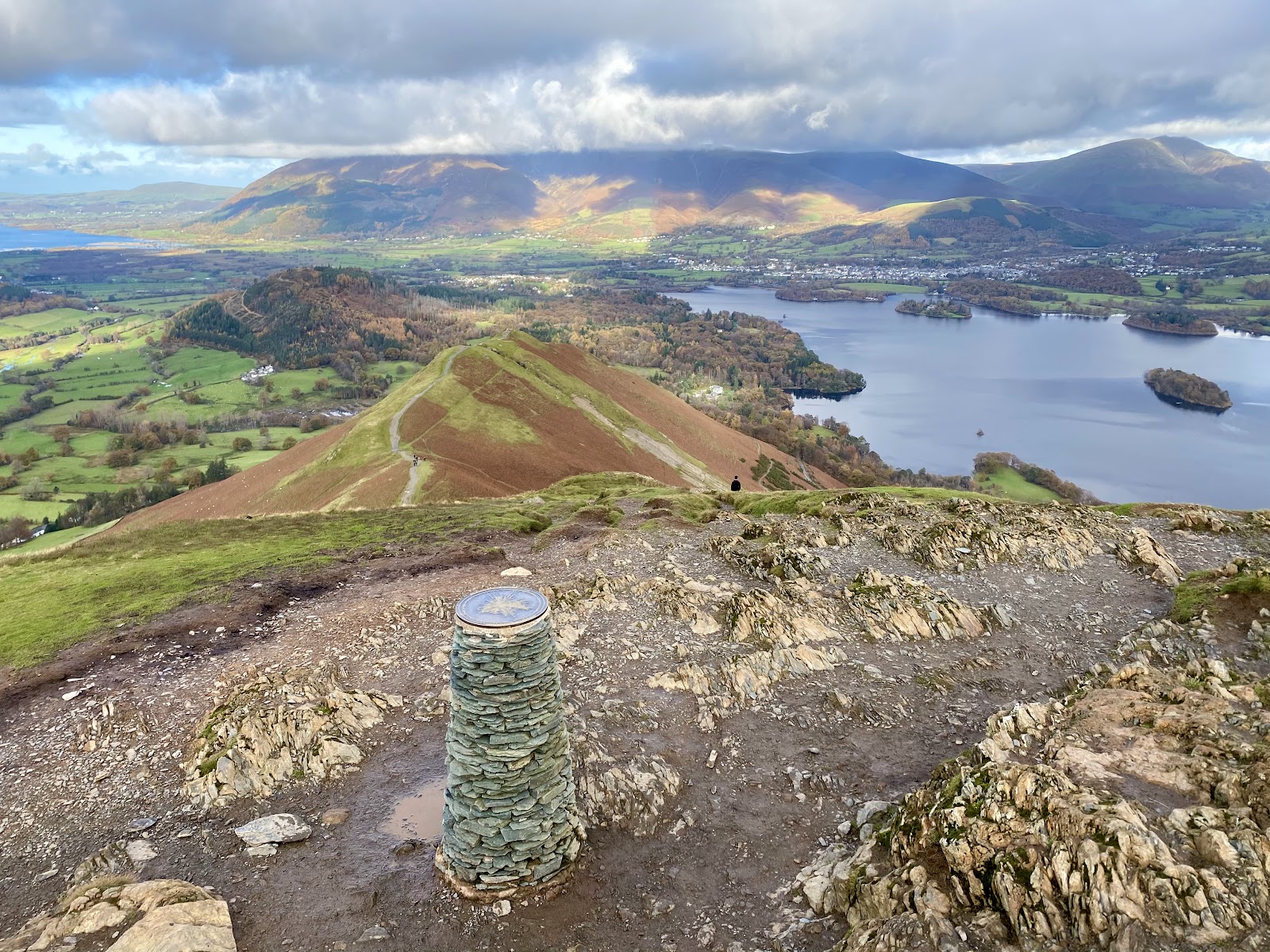
Any visit to Keswick should start at the lake. Derwentwater is often called the Queen of the Lakes, and while superlatives are freely thrown around in the Lake District, this one has some justification. The lake stretches three miles south into Borrowdale, ringed by crags and wooded shores, with several small islands dotting the water.
The Keswick Launch Company operates a regular boat service that circles the lake, stopping at eight landing stages. A hop-on, hop-off ticket (around GBP 13.75 for adults in 2025) lets you break the journey at Ashness Gate for the walk up to Ashness Bridge, or at Hawes End for a gentle stroll through Brandelhow woods on the western shore. The full circuit takes about fifty minutes without stopping and is a fine thing to do on a grey morning when the fells are hidden in cloud.
For something more active, Derwentwater Marina and Nichol End Marina both hire rowing boats, kayaks, and stand-up paddleboards. Conditions on the lake can change quickly and the water is cold year-round -- beginners should hire from a supervised centre and always wear a buoyancy aid. Paddling out towards St Herbert's Island (landing is permitted, though camping and fires are not allowed) gives a different perspective on the surrounding fells.
The Castlerigg Stone Circle
About a mile and a half southeast of the town centre, Castlerigg Stone Circle stands on a raised plateau with a 360-degree panorama of mountains. This is one of the oldest stone circles in Britain, dating to roughly 3000 BC, and its setting is arguably the most dramatic of any in the country. Thirty-eight stones of varying height form an oval, with a further ten stones arranged in a rectangle within the eastern side.
Castlerigg is free to visit and open at all times. It is managed by English Heritage. Early morning or late afternoon visits avoid the crowds and catch the best light. The walk from Keswick town centre takes about thirty minutes along quiet lanes, or there is a small free car park on the approach road off the A591.
Keswick Museum and Art Gallery
Keswick Museum, housed in a Victorian building in Fitz Park, underwent a major refurbishment and reopened in 2014. The collection reflects the town's eclectic history: a 500-year-old cat mummified in a wall, a set of musical stones that can be played like a xylophone, original manuscripts by Wordsworth and Southey, and geological specimens from the surrounding fells.
Admission is around GBP 7 for adults. The museum is compact enough to visit in an hour, and Fitz Park itself is a pleasant green space with a riverside path, a putting green, and views up to Latrigg.
The Derwent Pencil Museum
Keswick was the birthplace of the pencil industry, thanks to the discovery of graphite in Borrowdale in the sixteenth century. The Derwent Pencil Museum, near Greta Bridge, tells this surprisingly interesting story, from the original graphite mines through to modern pencil manufacturing. Highlights include the world's largest coloured pencil and a replica wartime pencil containing a hidden map and compass for use by escaping prisoners of war.
Admission is around GBP 7 for adults. Children tend to enjoy the drawing activities, and the shop is a good place to pick up art supplies. Allow about forty-five minutes.
Theatre by the Lake
Theatre by the Lake, set in landscaped grounds on Derwentwater's shore, is one of the most attractively situated theatres in England. It runs a year-round programme of plays, with a repertory season in summer that typically includes a mix of new writing, classic drama, and at least one family show. The building houses two performance spaces: the Main House (around 400 seats) and the smaller Studio.
Booking ahead is advisable for summer shows. Pre-theatre dining is available at several restaurants in town, and the theatre's own cafe has lakeside views.
Walking from Keswick
Keswick is ringed by excellent walks, and most start directly from the town centre.
Latrigg is the obvious first choice for a shorter outing. This small fell (368m) sits directly above Keswick and offers one of the finest viewpoints in the Lake District, looking south across Derwentwater to Borrowdale and the high fells beyond. The path from the Underscar car park to the summit takes about twenty-five minutes and is less strenuous than most fell walks, though it still involves a steady uphill climb. Wear appropriate footwear. The full circuit back via Brundholme Woods takes around ninety minutes.
Catbells is the classic Keswick fell walk and one of the most popular in the Lake District. At 451m it is not especially high, but the ridge is narrow and exposed in places, with steep drops on either side -- check the weather forecast before setting out, wear appropriate boots and clothing, and be prepared to turn back if conditions deteriorate. The views down to Derwentwater are superb. Most walkers take the Keswick Launch to Hawes End and climb from the western shore. Allow two to three hours for the return trip.
Walla Crag provides a longer, quieter alternative. The route follows the eastern shore of Derwentwater through Great Wood before climbing to the crag top at 379m, with views along the full length of the lake. The circular walk via Rakefoot and Springs Farm is about five miles and takes three to four hours.
Where to Eat and Drink
Fellpack on Lake Road has become one of Keswick's most popular spots, serving an eclectic, seasonal menu with international influences, craft beer, and decent coffee in a stripped-back, modern space. It works for a quick lunch or a longer evening meal. Booking is possible, though tables are also kept for walk-ins.
The Pheasant Inn on Crosthwaite Road, a ten-minute walk from the town centre, is a proper Lakeland pub with real ales, a solid menu of locally sourced dishes, and a relaxed atmosphere. The Sunday roast is well regarded.
Casa Bella on Station Street serves reliable Italian food in a cosy setting. It is a good option for families and offers better value than some of Keswick's more ambitious restaurants.
George Fisher's Cafe, above the famous outdoor shop on Borrowdale Road, is a useful pit stop. The cafe is simple and functional, and the shop below is worth browsing whether or not you need new walking boots.
Keswick Market and Shopping
Keswick's charter market takes place every Saturday in the Market Square, with stalls selling local produce, crafts, clothing, and food. It has been running for over 700 years, and while the modern version is modest in scale, it adds genuine life to the town centre.
Beyond the market, Keswick has an unusually good selection of independent shops for its size. George Fisher and Keswick Mountain Sports are among the best outdoor retailers in the Lake District. The town also has several bookshops, galleries, and gift shops along Main Street and the surrounding lanes.
Practical Information
Getting there: Keswick does not have a railway station. The nearest is Penrith, about eighteen miles east on the West Coast Main Line. The X4/X5 bus (Stagecoach) runs regularly between Penrith station and Keswick, taking around forty minutes. By car, Keswick is reached via the A66 from the M6 (junction 40).
Parking: The main pay-and-display car parks are at Lakeside (closest to the lake), Bell Close, and Otley Road. In peak season, these fill early, so arriving before 10am is advisable. There is also parking at the Lakeside car park on the B5289 heading towards Borrowdale.
Market days: Saturday (all year), plus a Thursday market from February to December.
Best time to visit: Late spring (May to June) and early autumn (September to October) offer the best balance of decent weather and fewer crowds. Summer weekends are busy. Winter has its own appeal, with quieter fells and the Keswick Mountain Festival typically held in May.
Getting around: Keswick's centre is compact and easily walkable. The Borrowdale bus (78/77A) is useful for accessing trailheads in the valley to the south. The Honister Rambler (77/77A) does a circular route taking in Buttermere.
Seasonal Events
Keswick Mountain Festival (usually May) celebrates outdoor culture with trail runs, speaker events, and guided walks.
Keswick Beer Festival (June) is a popular weekend event at Keswick Rugby Club.
Christmas Market (late November to early December) brings additional festive stalls to the Market Square.
Keswick Agricultural Show (August Bank Holiday Monday) is a traditional Lakeland show with fell racing, sheepdog trials, and livestock judging.